

In Los Angeles, in Mumbai, in Kuala Lumpur and in several other cities around the planet, autonomous plastic-eating robots are taking over the waterways. They are, in one form or other, chomping up and extracting masses of the manmade garbage.
This may sound like a far-flung scene from science fiction. But these waterborne “interceptors” — monitored using drones, GPS trackers, remote-sensing cameras and time-lapse surveys — are on the frontlines of the fight to stop plastic from entering our oceans.
“We are tackling the global environmental crisis of plastic pollution in oceans and rivers,” says Boyan Slat, founder and CEO of The Ocean Cleanup, the tech startup based in the Netherlands that is producintg these plastic-removal machines.
“Trillions of plastic pieces threaten marine life, ecosystems, and impact the lives and livelihoods of millions of people as plastics degrade into microplastics that enter the food chain.”
Today The Ocean Cleanup, a nonprofit organization that has received tens of millions of dollars in funding, including from Deloitte, JP Morgan, the Korean car company Kia and the Dutch government, is perhaps the most prominent project in the world when it comes to removing plastic from aquatic environments, whether they be rivers or oceans. The visually compelling process has earned it a huge social media following, too: The Ocean Cleanup’s TikTok account has 2.6 million followers, with its most popular video racking up over 50 million views and many others over six figures.
The Ocean Cleanup has the ambitious goal of removing 90 percent of all floating plastic from the ocean by 2040, Reasons to be Cheerful reports. That includes the interception of plastic waste in rivers and the extraction of legacy plastic from the ocean as well as on-land sweeps to remove plastic pollution from coastlines and nearby areas.
The startup, founded in 2013 by the then-18-year-old Dutch aerospace engineering student Slat, has begun to make progress — even if the haul remains a drop in the ocean, relatively.
It claims it removed over 27,000 metric tons of plastic trash in 2025. The total figure is now over 66,000 tons thanks to dozens of interceptors that are deployed across 11 countries. The Ocean Cleanup employs a team of about 200 people.
“We remain ambitious and optimistic, with significant progress made in both technology and scale,” adds Slat.
The plastic pollution crisis is one of the world’s most pressing environmental issues. Annual global plastic production has skyrocketed from 1.5 million metric tons in 1950, when the industry took off, up to 430 million tons in 2024. Much of that is not recycled or properly managed. In turn, every day, the equivalent of 2,000 garbage trucks full of plastic are dumped into the world’s oceans, rivers and lakes. And if current trends continue, global plastic waste is set to triple by 2060, with around half ending up in landfill and less than a fifth recycled, according to estimates by the Organisation for Economic Co-operation and Development.
There is a clear consensus among leading plastic waste experts on the single best way to address this crisis: by reducing humanity’s jaw-dropping levels of plastic production.
“We have to focus on strategies to turn off the tap,” says Richard Thompson, a professor of marine biology and director of the Marine Institute at the University of Plymouth. “Preventing plastics from entering the environment simply has to be the priority, by far.”
Arturo Castillo, assistant professor of geosciences at Utrecht University and former leader of the Ocean Plastic Solutions Network at Imperial College London, agrees.
“For every euro that is not spent in prevention along the life cycle, the amount of plastic in the environment will also grow exponentially and it will always be a multiple of what you could have cleaned up with that same euro,” he argues.
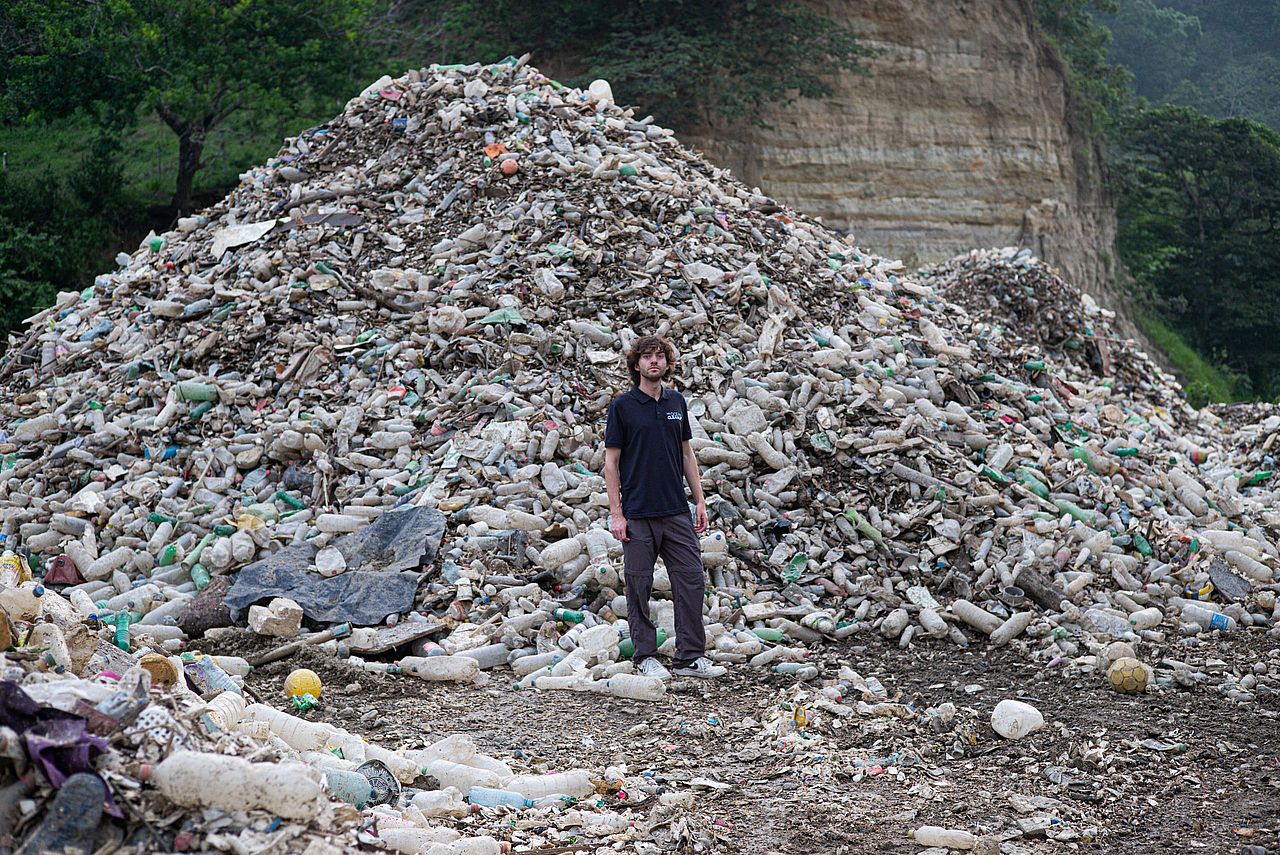
But Thompson, who authored a 2024 report on the removal of plastics from aquatic environments for the Royal Society, the U.K.’s national academy of sciences, concedes that “some amount” of plastic removal will be necessary to reduce the risk of harm to wildlife, ecosystems and potentially humans. Plastic takes from 20 to 500 years to decompose, depending on the product — and even then only partially, into microplastics, which are harmful in different ways.
“There is a place for clean-up efforts always within a broader strategy, of which it needs to be a small part,” adds Castillo.
Slat, for his part, admits that “stopping plastic at the upstream source is essential.”
In order to maximize impact, The Ocean Cleanup carried out research into how and where plastics are entering the seas. A study, commissioned by the organization and published in the journal Science Advances in 2021, estimated that just 1,000 of the world’s three million rivers act as the pathway for 80 percent of plastics that reach the ocean.
Hence, its decision to deploy interceptors in rivers.
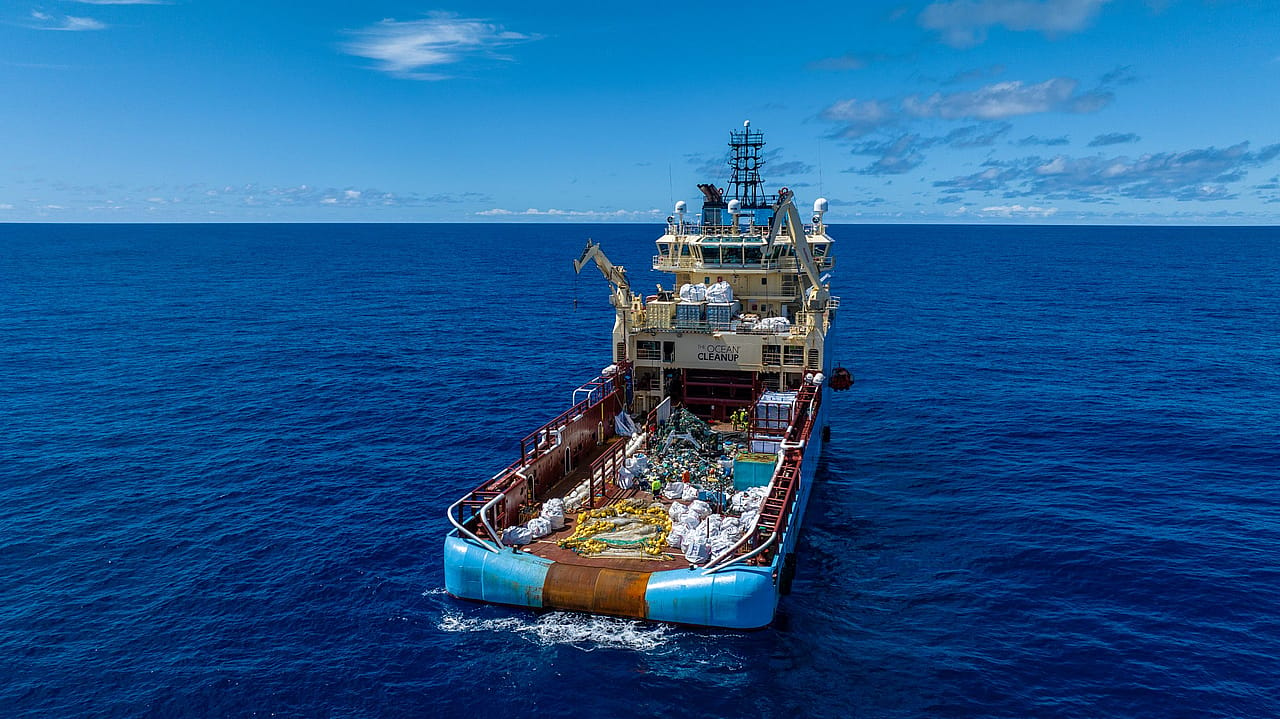
The startup has developed a number of models.
Some are U-shaped and anchored at the mouths of small rivers to capture waste, others are better-reinforced cross-river barricades that can withstand strong currents and even tsunamis (as, they say, has been needed in Guatemala).
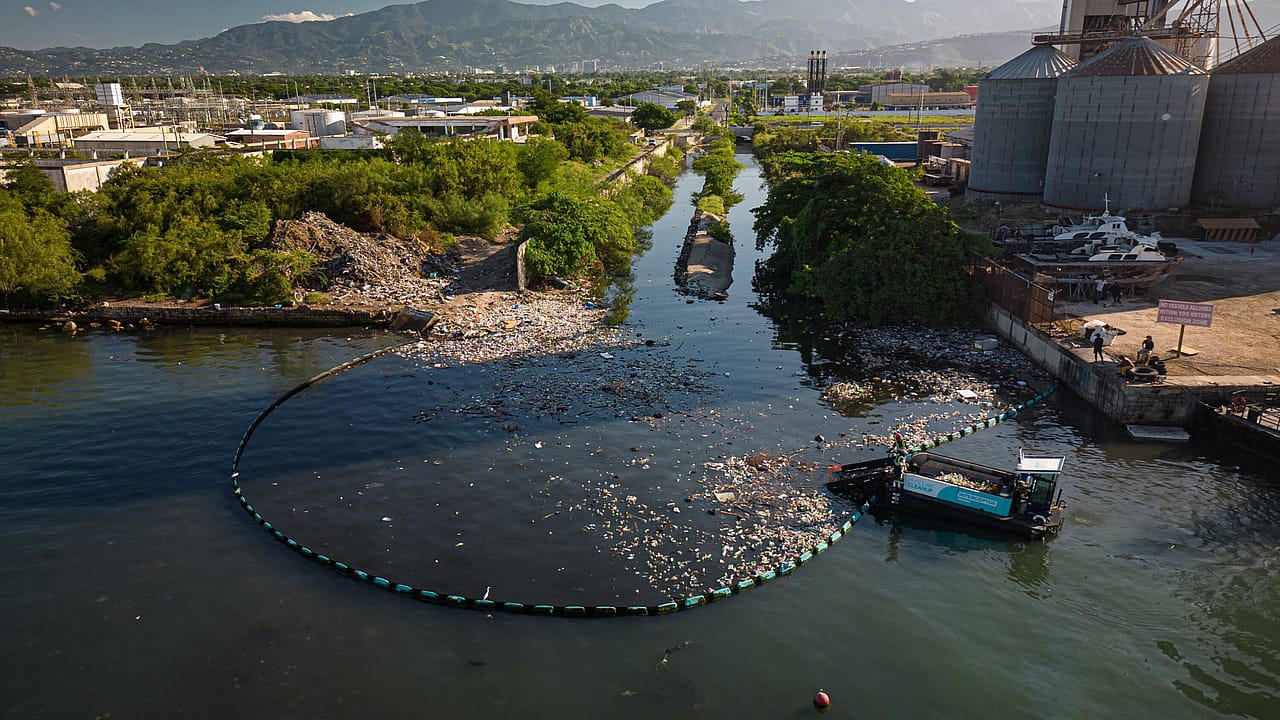
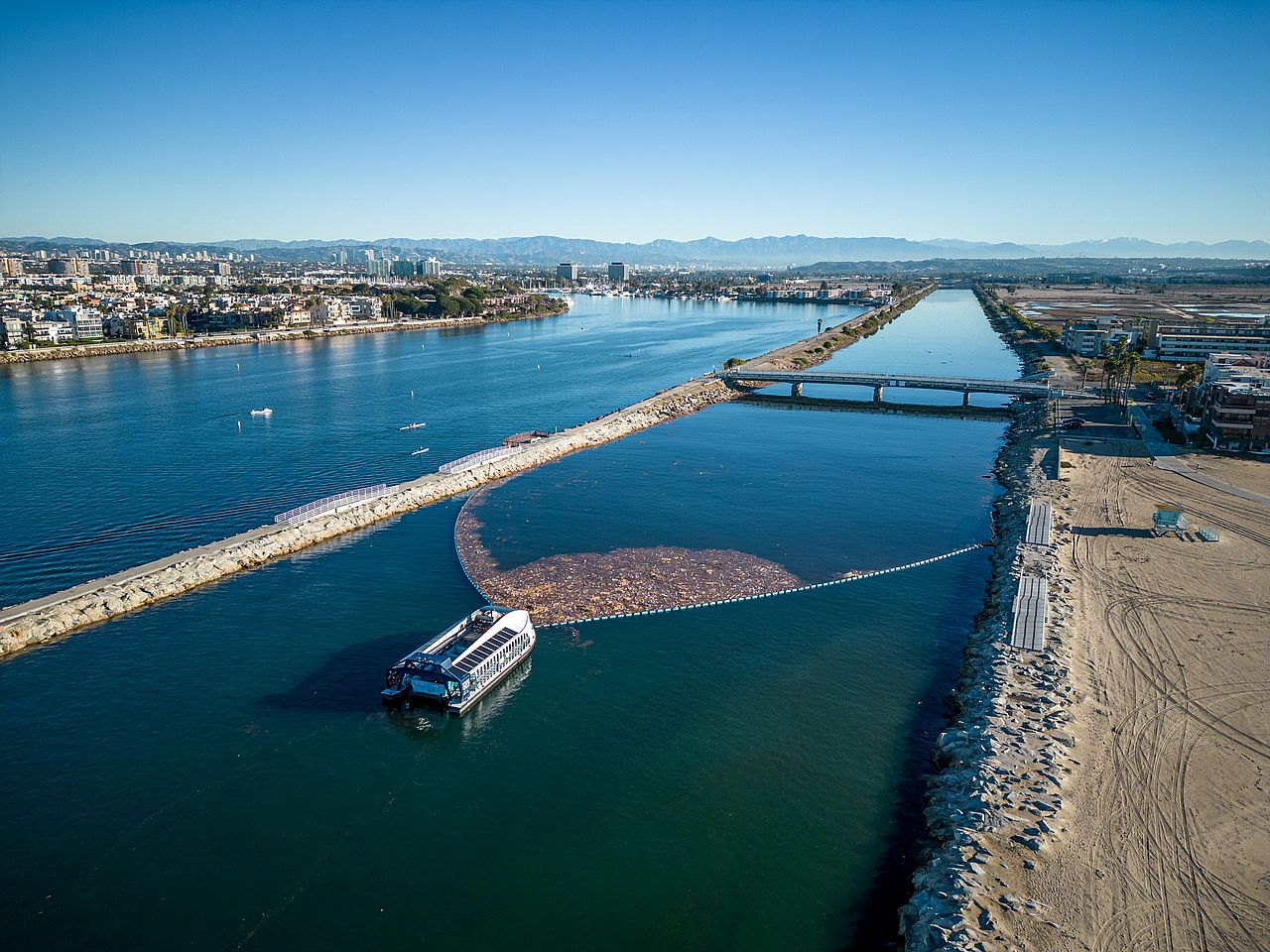
Yet the most common interceptor deployed by The Ocean Cleanup is an autonomous, solar-powered boat with a conveyor belt to gather the plastic.
This model is currently deployed in several countries, including Indonesia, Malaysia, the Dominican Republic, Vietnam, the U.S. and Thailand.
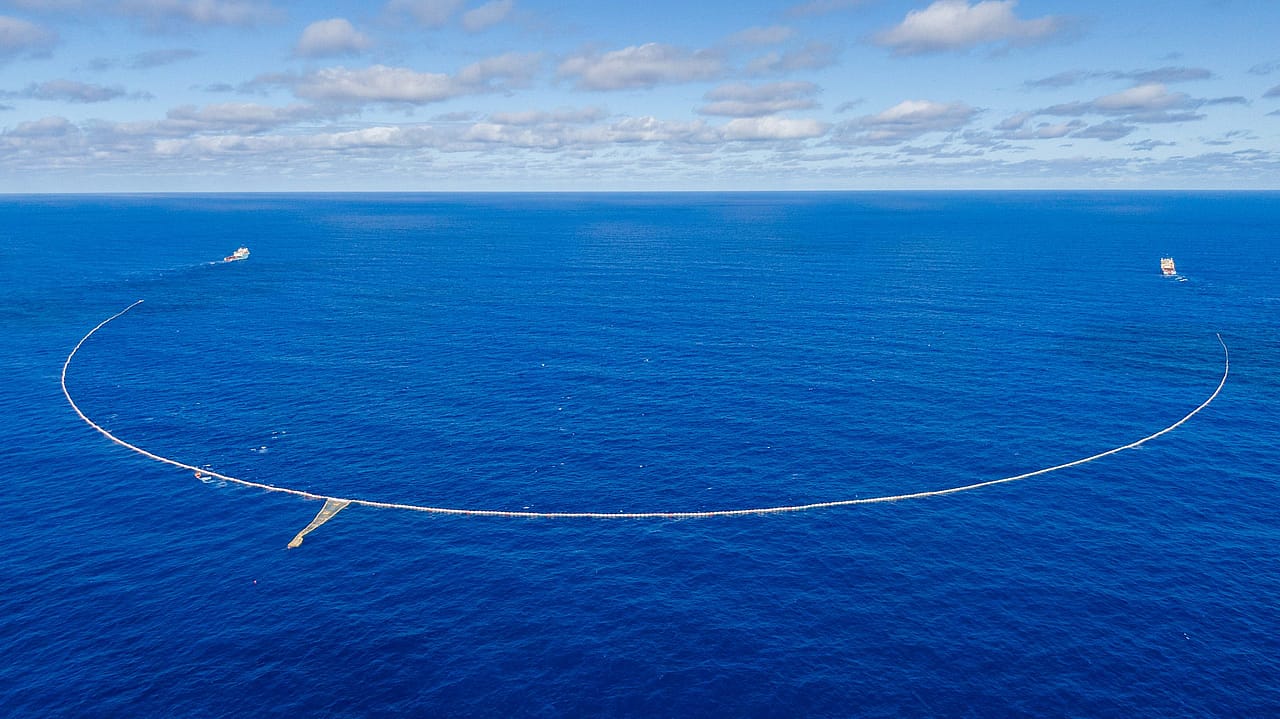
Another model, which is being used in the ocean to tackle the Great Pacific Garbage Patch — the largest accumulation of ocean plastic in the world, located in the waters between Hawaii and California and three times the size of France — can clean an area the size of a football field in five seconds, according to the organization.
“Legacy plastic already in the ocean must also be addressed to protect marine life and ecosystems,” adds Slat.
The Ocean Cleanup points to already observed negative impacts such as the fact that animals mistake plastic for food and the deadly entanglements caused by “ghost” fishing gear, as well as less visible damage: As plastics begin to break down into microplastics, they become impossible to remove and can enter the food chain, likely contaminating seafood and disrupting oceanic carbon sequestration, with losses ranging from an estimated 15 to 30 million metric tons of carbon a year.
Recovered plastic is recycled and, in some cases, used in products. For example, plastic from the Great Pacific Garbage Patch has been used by Kia to make a car trunk liner as well as a limited edition LP by the band Coldplay, another partner with the project.
More recently, the organization has been ramping up its efforts in urban rivers. In June 2025, following a pilot in Kingston, Jamaica, it announced a program to roll out in 30 key cities in Asia and the Americas. It claims this could prevent up to a third of all plastic from flowing from the world’s rivers into the ocean by the end of the decade.
Before deployment in a new location, The Ocean Cleanup conducts a “Smart River Survey,” which involves research on local river conditions, pollution sources and flow patterns across metropolitan areas. Aerial drones, AI-powered image analysis and GPS-tagged “dummy” plastics are used to chart waterways and track how waste moves “from streets to sea.” In response to this information, interceptors are adapted to local conditions. According to Slat, the design and deployment strategy in Los Angeles differed from Kuala Lumpur due to differences in river size, flow and waste composition.
Alongside intercepting new plastic, the urban rivers program will also remove debris from nearby coasts, mangroves and coral reefs.
The prioritization of rivers is likely to be a more effective strategy when it comes to plastic removal, argues Thompson.
“The further back upstream we can go, as close to source as possible, away from tidal zones, the better,” he says. “It’s much more effective to do this work in rivers. Mechanical devices in the ocean are never going to help us address the problem.”
But The Ocean Cleanup’s approach has faced considerable criticism.
The initiative got off to a rough start wrought with technical difficulties and setbacks. In September 2018, it sent off a device with a boom and net design to the Great Pacific Garbage Patch, aiming to tackle half of its debris in five years. But within a few months, the device had to be towed back: It had broken in two.
While the models have improved significantly since then, there are also concerns about the impact that the interceptors could have on biodiversity, including trapping and killing animals and disrupting ecosystems.
“This is the first design constraint not just for Ocean Cleanup but for all companies developing any on-environment cleanup or remediation technology,” says Castillo, who points to the fact that cleanups will need to be done close to the shore, where biodiversity is most abundant. “They will intercept wildlife and harm biodiversity. But that may be necessary to an extent to remove some plastic. It’s important to have a sober debate about that fact.”
Research commissioned by The Ocean Cleanup found that its operations in the Great Pacific Garbage Patch were less harmful to marine life than plastic pollution. But the damage was not negligible: During two and a half years of operations, for example, 47 sea turtles entered the machinery and while most were unharmed, 11 died.
And while The Ocean Cleanup says that it has systems to process the captured plastic, Castillo casts doubt on what will happen when the scale ramps up. “If we were able to fish everything out of the ocean, what would we do? Where will it end up? Many scientists are uncomfortable with recycling,” he says. They believe that in reality plastic can be recycled far less than is commonly thought due to the different kinds of chemical used in different plastic products.
The Ocean Cleanup openly admits that its efforts cannot address the significant issue of microplastics that are already in the ocean either. Nor can it tackle the plastics that sink rather than float. Securing the permits to install interceptors can also “take time,” according to Slat, and adapting to diverse local conditions in river projects is a “key challenge.”
In the bigger picture of plastic waste, talks aimed at curbing the production of plastic — which is almost entirely made using fossil fuels such as oil, gas and coal — have been in deadlock for years. Experts like Thompson argue that any agreement should include financing for lower-income countries to ensure a “just” transition away from plastics.
He also says that accountability for tech initiatives must improve. “We can’t rely on the industry to be its own police force,” he elaborates. “We need independent data.”
Thompson, meanwhile, highlights the benefits of a much simpler solution than plastic-eating robots: community-driven beach cleanups, which are low-cost, effective, scalable and sustainable.
At the same time, Thompson sees hope for the world’s oceans now that recognition of the plastic crisis has genuinely begun to materialize. “The situation has changed during my career,” he says. “We actually have consensus over the problem, in industry, policy and society.”
This story has been co-published by Reasons to be Cheerful and the Outrider Foundation.
This story was produced by Reasons to be Cheerful and reviewed and distributed by Stacker.


